Geotechnical Engineering in Swords

Together, we solve the challenges of tomorrow.

LEARN MORE →

Too many foundation designs in Swords rely on generic bearing capacity tables without understanding what lies beneath the glacial till. It works until it doesn't. The Broadmeadow River valley and its tributaries have deposited lenses of soft alluvial clay that standard site investigations often miss, and when a shallow footing hits one of these pockets, differential settlement cracks appear within the first two years. A proper soil mechanics study maps those weak zones before concrete is poured. Our laboratory runs consolidated-undrained triaxial tests, oedometer consolidation, and direct shear on undisturbed samples extracted from boreholes across the Swords area. For projects near the Ward River, we pair the lab programme with test pits to identify the transition between made ground and natural deposits, and CPT testing to profile the soft clay layers that govern settlement calculations under Eurocode 7.

The difference between a €3,000 soil mechanics study and a €30,000 underpinning job is knowing which Swords glacial till layer you're actually founding on.
Geotechnical Engineering in Swords
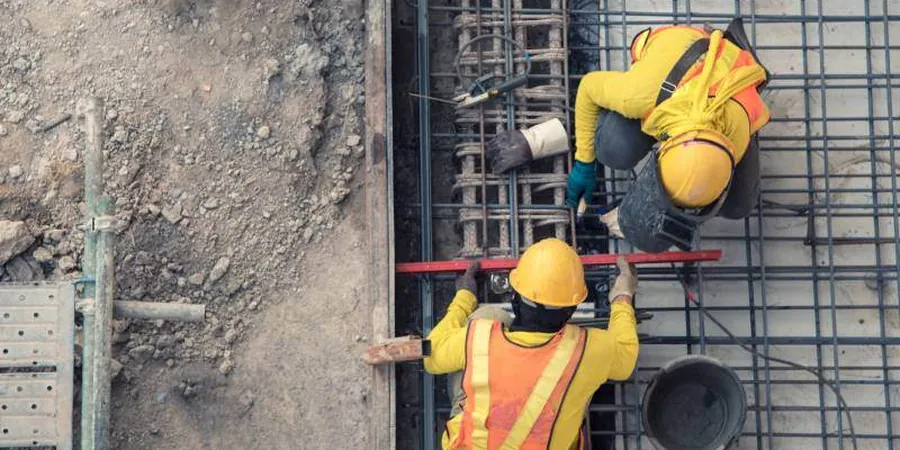
Technical reference image — Swords

Methodology and scope

The triaxial cell in our Dublin laboratory runs at confining pressures calibrated to the actual overburden stress at your Swords site, not a textbook default. We saturate the specimens under back-pressure until Skempton's B parameter exceeds 0.95, then shear them at a rate slow enough to allow pore pressure equalisation. The consolidation stage replicates the loading history of the glacial till that underlies most of Swords, where the upper brown boulder clay is stiffer than the black Dublin clay beneath. Our oedometer frames apply incremental loads from 12.5 kPa up to 3200 kPa, capturing the preconsolidation pressure that tells us whether the soil will behave as overconsolidated or normally consolidated. Throughout the programme, we cross-check classification with Atterberg limits to confirm the plasticity range of the cohesive layers. All testing follows IS EN ISO 17892 series, with every load ring and pressure transducer carrying a valid UKAS-equivalent calibration certificate traceable to national standards.

Local considerations

IS EN 1997-1:2005 (Eurocode 7) requires that the ground investigation be sufficient to establish the strength and stiffness parameters needed for Geotechnical Category 2 structures, which covers most commercial and multi-unit residential buildings in Swords. The risk here is not just soft clay but variability. The glacial till across the Swords area is far from uniform: lenses of sand and gravel within the till act as drainage paths that accelerate consolidation under load, while adjacent clay-rich zones drain slowly and develop excess pore pressure during construction. If the soil mechanics study tests only one borehole sample and assumes homogeneity, the foundation design will be unconservative. For the apartment developments underway near Swords Pavilions and along the R132 corridor, we run a minimum of three consolidation tests per stratigraphic unit to capture the scatter in compressibility. On sites with sloping ground toward the Broadmeadow, we also integrate slope stability analysis because the same soft clay that governs settlement also controls the long-term factor of safety on cut slopes.

Need a geotechnical assessment?

Reply within 24h.

Email: contact@geotechnical-engineering.co

Technical parameters

ParameterTypical value
Effective friction angle (φ')28° to 36° (glacial till)
Undrained shear strength (cu)40 to 150 kPa (Dublin boulder clay)
Preconsolidation pressure (σ'p)200 to 600 kPa (overconsolidated till)
Coefficient of consolidation (cv)2 to 15 m²/year
Compression index (Cc)0.08 to 0.25
Liquidity index (IL)-0.2 to 0.1 (stiff till)
Swell pressure10 to 60 kPa (low plasticity)
Sample disturbance classificationZone I or II per EN ISO 22475-1

Associated technical services

01

Triaxial and Shear Strength Testing

Consolidated-undrained (CU) and unconsolidated-undrained (UU) triaxial tests on 100 mm diameter Shelby tube samples extracted from Swords boreholes. Effective stress parameters (c' and φ') determined with pore pressure measurement, plus drained direct shear for granular interbeds within the till. Results feed directly into bearing capacity and retaining wall design.

02

Consolidation and Settlement Analysis

Incremental load oedometer testing per IS EN ISO 17892-5 to determine mv, cv, Cc, and σ'p for each compressible layer. We provide settlement-time curves so your structural engineer can estimate both magnitude and rate of settlement under your Swords foundation loads, critical for the soft alluvial clays near the Ward River floodplain.

Applicable standards

IS EN 1997-1:2005 (Eurocode 7: Geotechnical design), IS EN ISO 17892 series (Laboratory testing of soil), IS EN ISO 22475-1 (Sampling and groundwater measurement), I.S. EN 1990:2002 (Basis of structural design), TII Publication DN-GEO-03030 (Earthworks and capping)

Frequently asked questions

How much does a soil mechanics study cost for a Swords residential project?

For a typical Swords residential project requiring triaxial, consolidation, and classification testing on samples from two to three boreholes, the laboratory programme ranges from €3,160 to €4,460 depending on the number of specimens and test types selected. This covers CU triaxial, oedometer consolidation, Atterberg limits, particle size distribution, and bulk density. We provide a fixed-price quote after reviewing the ground investigation contractor's sampling plan.

How long does the laboratory testing take for a Swords site?

A standard soil mechanics programme takes two to three weeks from sample receipt to final report. Consolidation tests require the longest lead time because each load increment must be held for 24 hours, and a five-increment test runs for five days minimum. Triaxial shear stages take one to two days per specimen. If your Swords project has a tight construction schedule, we can prioritise the critical-path tests and issue interim results.

Do you handle the site sampling and boreholes in Swords?

We are a testing laboratory, not a drilling contractor. We receive undisturbed samples from site investigation companies operating in Swords and north Dublin. We can recommend experienced drillers who use thin-wall Shelby tubes and piston samplers suitable for the glacial till, and we provide sample handling instructions to minimise disturbance during transport from your Swords site to our Dublin laboratory.

What soil classification standard do you use for Swords projects?

Our laboratory classifies soils per IS EN ISO 14688-1 and 14688-2, which is the European standard used for all Fingal County Council submissions. We report particle size distribution, plasticity, and density, and assign the soil group symbol. For projects involving road construction or TII oversight, we also cross-reference the classification to the TII Specification for Road Works Series 600 earthworks requirements.
Location and service area

We serve projects across Swords and its metropolitan area.

View larger map