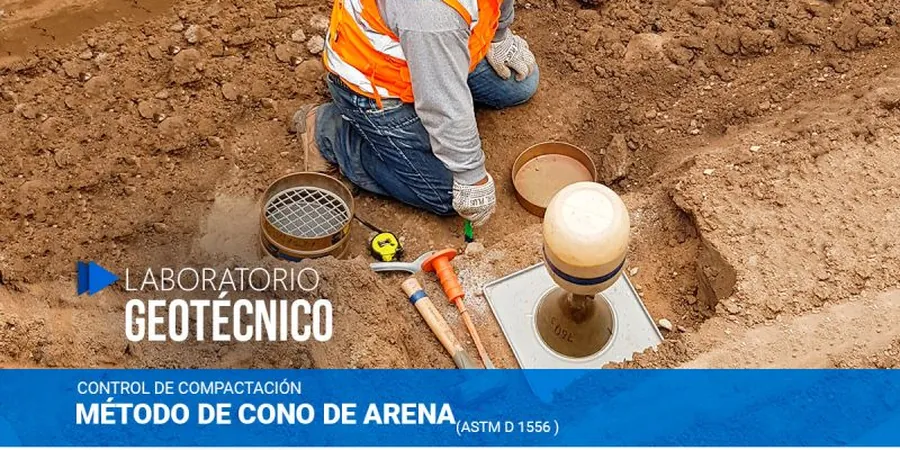
A project between the dense housing developments near River Valley and the newer commercial parks along the Airside Retail Park corridor can encounter surprisingly different fill histories. The older Drumlin-derived till in some Swords neighborhoods compacts differently than the recent limestone aggregate fills used over the last decade of expansion. For earthworks contractors in Swords, verifying that each lift of material actually meets specification is not just paperwork; it is the difference between a stable pavement and a sunken car park within two winters. The sand cone method remains the most direct way to confirm compaction compliance on site, and in Swords, where the underlying glacial deposits can mask pockets of looser material, this test provides immediate, actionable data. We often recommend pairing the field density verification with a Proctor test to establish the real laboratory maximum dry density of the specific material being compacted, ensuring the reference curve is not just a generic assumption.
A sand cone test in Swords takes less than 40 minutes per point and gives the contractor a legally defensible density record before the next lift of fill covers the evidence.
Local considerations
The Irish Sea influence on Swords creates a damp, temperate climate where fill materials rarely dry back fully. A compacted layer that passes density testing on a dry Tuesday in May can fail a retest after a wet weekend, not because the soil changed, but because the reference Proctor was run at the wrong moisture content. The sand cone test in Swords must be read alongside a proper moisture correction, or the reported relative compaction can drift by 3 to 5 percent. On larger earthworks platforms, such as the logistics parks expanding northward from the town centre, skipping just one test per 500 m² can allow an under-compacted lens to go undetected, eventually causing differential settlement that cracks floor slabs and buried services. The consequences are particularly sharp in Swords because the underlying bedrock is deep and the glacial till can vary from stiff to soft over short distances. A rigorous density testing programme is the cheapest insurance against a future forensic investigation.
Frequently asked questions
What does a field density test with the sand cone method cost in the Swords area?
For sites around Swords, a single sand cone field density test typically falls in the range of €90 to €120 per point, depending on the number of points tested per visit and the travel distance. A half-day programme covering six to eight points provides better economy per test than a single-point call-out.
How soon after compaction can the sand cone test be performed in Swords?
The test can be performed immediately after the roller passes; no waiting period is required. However, if rain has recently saturated the surface in Swords, the top 20 mm should be trimmed away to reach the representative compacted material before starting the excavation.
Can the sand cone method be used on the boulder clay common around Swords?
Yes, but with constraints. The dense, stony Dublin boulder clay often contains cobbles that can distort the hole walls. ASTM D1556 permits the method for soils with maximum particle sizes up to 2 inches, but for very gravelly boulder clay, we may recommend a larger excavation volume to maintain accuracy, or a parallel Proctor test on the same material to validate the reference density.