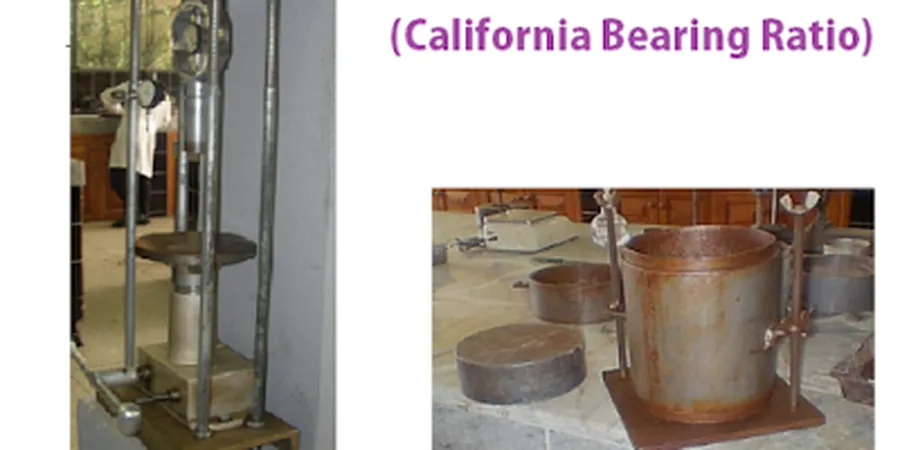
The Broadmeadow River shaped a lot more than the landscape around Swords. Centuries of alluvial deposition left a legacy of soft, often variable soils that engineers here have to deal with on a daily basis. As the county town of Fingal, Swords has seen its population surge past 42,000, triggering a wave of new housing estates and link roads that demand precise subgrade evaluation. The laboratory CBR test provides exactly that. Our team runs the soaked California Bearing Ratio test under controlled conditions, delivering the CBR value that dictates pavement thickness for access roads, car parks, and industrial yards. Without it, you are guessing on layer design. With it, you have a defensible number backed by BS 1377: Part 4 methodology. We often pair this with a Proctor test to lock in the compaction target before any roller hits the fill. In Swords, where one site might hit dense boulder clay and the next hits soft riverine silt, that data is the difference between a pavement that lasts and one that fails after two winters.
A 96-hour soaked CBR value is the single most reliable predictor of long-term pavement performance on Irish glacial till.
Frequently asked questions
What is the typical turnaround time for a laboratory CBR test in Swords?
The standard turnaround is 8 working days from sample receipt to the final report. The 96-hour soaking period is mandatory per BS 1377 and cannot be reduced. Compaction and penetration testing plus calculations require an additional 3 to 4 days in the lab.
How much does a laboratory CBR test cost for a Swords project?
The cost ranges from €100 to €180 per sample, depending on whether it is a single-point CBR or a three-point series to establish a compaction curve relationship. The three-point series provides a more complete picture of how density affects the bearing capacity.
Why is the sample soaked for 96 hours before testing?
The 4-day soak simulates the worst-case saturated condition the subgrade will experience during the pavement's service life. Irish weather means subgrades spend much of the year at or near saturation. A dry CBR would overestimate the strength and lead to an under-designed pavement that ruts prematurely.
What material size can the Swords laboratory accommodate?
The standard CBR mold accepts material passing the 20 mm sieve. If your sample contains larger particles, we can provide instructions for scalping on site before delivery, or we can discuss running the test on the finer fraction and applying a correction factor per the TII specification.