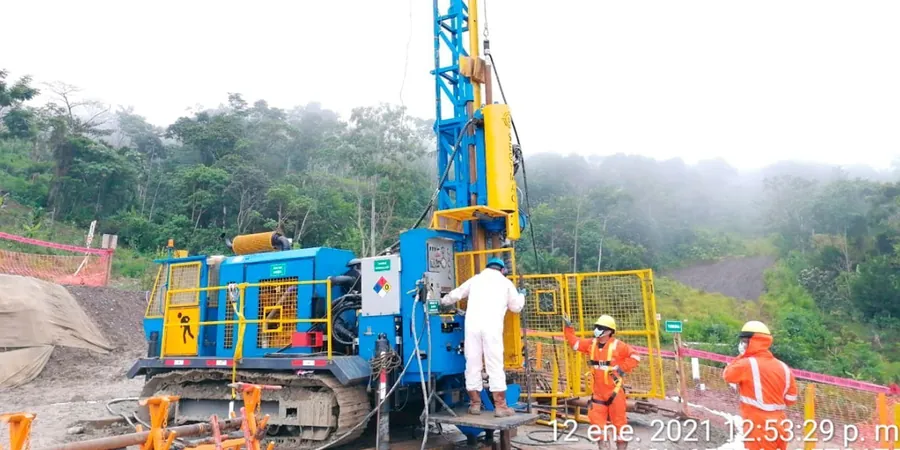
Swords grew from a monastic settlement beside the Ward River into one of Ireland’s fastest-developing commuter towns, and that growth has pushed construction onto the glacial tills and alluvial gravels that define the lower Broadmeadow catchment. Designing basements, soakaways or deep drainage without site-specific permeability data can unravel quickly in these mixed deposits. The field permeability test using Lefranc or Lugeon methods provides direct measurement of hydraulic conductivity in soil or rock, giving engineers the numbers they need for dewatering design, groundwater control plans and SuDS infiltration assessments. In a town where the water table often sits within two metres of ground level, especially near the Ward, the difference between a desk-study assumption and a properly executed in-situ permeability test can rewrite the foundation strategy. We run these tests on active sites across the Swords area, from Airside Business Park to the residential schemes rising around Fosterstown, always calibrating results against local drift geology and Fingal County Council drainage requirements.
A Lugeon value above 10 in fissured limestone tells you more about grout take than a lab permeability test ever will.
Local considerations
The ground conditions shift noticeably between the high-street core of Swords, where compact gravelly till dominates, and the lower-lying lands toward the Broadmeadow Estuary, where soft alluvial silts and high groundwater create a different risk profile. In the town centre, low-permeability till can trap perched water behind basement retaining walls if the drainage design relies on generic infiltration rates. Near the estuary, overly optimistic permeability assumptions lead to undersized dewatering systems and prolonged pumping, which can trigger settlement in adjacent structures. A Lefranc test placed at the correct depth inside a spt-drilling borehole removes that guesswork, delivering K values that feed directly into Plaxis or SEEP/W groundwater models. On rock sites, skipping the Lugeon test means overlooking fracture-flow anisotropy: a borehole that hits one open fissure may show high permeability, while the rock mass a metre away remains tight. Understanding that variability is what separates a dry excavation from a flooded one in Swords.
Frequently asked questions
When does Fingal County Council require a field permeability test for a planning application in Swords?
Field permeability tests are typically required when the drainage design includes soakaways, infiltration trenches or any SuDS component relying on ground infiltration. The council follows the Greater Dublin Strategic Drainage Study guidance, which expects site-specific K values rather than textbook estimates. For basement developments, a groundwater control assessment supported by Lefranc or Lugeon data is standard practice.
What is the difference between a Lefranc test and a Lugeon test?
A Lefranc test measures hydraulic conductivity in soil by injecting or extracting water through an open section of a borehole, either under constant or variable head. It suits unconsolidated deposits like the gravels and tills found in Swords. A Lugeon test is a packer-isolated injection test in rock, reporting water take in Lugeon units (litres per metre of test interval per minute at 1 MPa pressure). It characterises fracture flow and is essential for grouting design or rock dewatering estimates.
How long does a field permeability test take on a Swords site?
A single Lefranc test at one depth interval usually completes within two to three hours once the borehole is drilled and developed. A Lugeon test with a five-pressure stage cycle takes around one hour per test interval. On a typical Swords project with two or three test horizons, the fieldwork fits within one day, with the interpretive report delivered within three working days.
What does field permeability testing cost in the Swords area?
The combined cost for Lefranc and Lugeon field permeability testing in Swords typically ranges from €590 to €870 per test interval, depending on depth, access conditions and the number of test stages required. Mobilisation and borehole drilling are priced separately based on the ground investigation scope.